Cedar Park is finished building. Now it is replacing things.
Ten minutes down 183A from us, all of it inside 78613. Everybody writes about the towns north of here because they are exploding, and meanwhile Cedar Park quietly turned into the one place in this service area where most of the houses are old enough to be on their second air conditioner and a fair number are on their third.
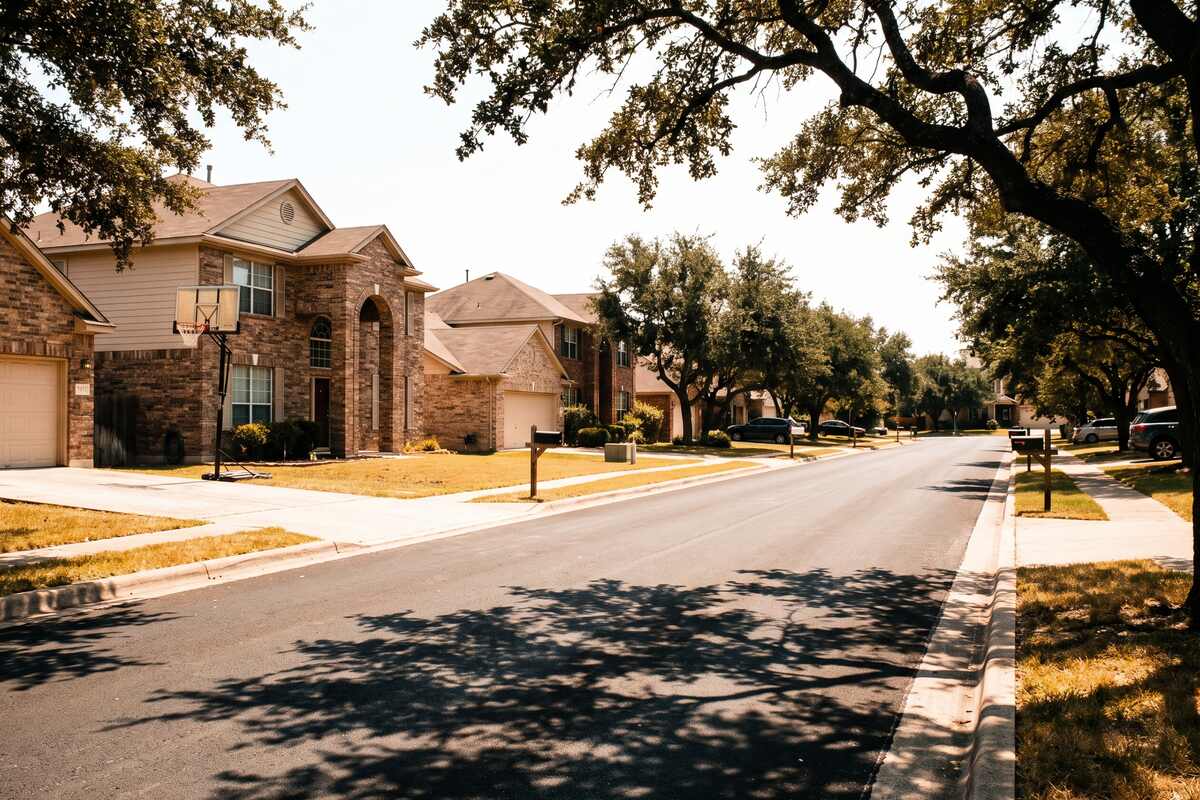
A flat town with old equipment is a very specific kind of market
The Census puts Cedar Park at about 78,380 people and up roughly one percent since 2020. One percent. Leander grew close to forty-eight in the same four years. Cedar Park is not slowing down so much as it is done: the land inside the city is largely spoken for, and what happens next happens to the houses that are already standing.
The median home here dates to 2005 and about fourteen percent of the stock went up before 1990, which is roughly double the pre-1990 share in Leander. Add the 1990s wave on top of that and you have thousands of houses somewhere between twenty-five and forty years old.
What lands on our schedule from those addresses is not usually a capacitor. It is a third-generation changeout on a house that has had two systems die in it already, with duct that was laid to serve a smaller original design and a return that was never resized when somebody bumped the tonnage up. You can put a new condenser on that and it will still run all afternoon and still leave the upstairs warm, because the machine was never the whole problem.
So on this side of the county we spend more time on the boring measurements. Static pressure. Return area. Where the flex is crushed against a truss. Read how we approach a system replacement if you want the order we do it in.
Refrigerant, and why a 2004 system is a different conversation
A good share of the oldest equipment still running in this town was charged with R-22. That refrigerant has been out of production for years and the price of what is left reflects it. Nothing about that makes your system illegal or unsafe. It makes a leak expensive, and it turns a repair-or-replace decision that used to be obvious into one worth actually doing the math on.
The newer end has its own shift. Manufacture and import of new R-410A residential split systems ended on the first of January 2025 under the EPA rule, with a sell-through period for existing inventory running into 2026. After that, new residential installs move to the A2L refrigerants. Your existing R-410A system stays legal to run and legal to service, and anybody telling you it has to come out this year is selling something.
One more thing worth saying plainly, because a lot of sites in this market have not updated it. The federal energy tax credit that used to help with a high efficiency changeout was terminated for property placed in service after the end of 2025. It is gone. If somebody is still quoting it to you, ask when they last checked.
The permit language here is the clearest in the county
Cedar Park does not make you guess. The city's own "Do I Need a Permit?" page lists "Heating and/or Air Condition Equipment" among the projects that require one, in those words. Contractor registration is required and it is free, through the MyGovernmentOnline portal. There is a homeowner path by homestead affidavit, but the city flags on the same page that HVAC work is limited by state guidelines, which is a polite way of saying you generally cannot permit your own changeout.
Codes took effect on the first of June 2022 and run the 2021 international package, mechanical code included, alongside the 2020 National Electrical Code. Note that edition. Leander is on the 2023 NEC. Two neighboring cities, ten minutes apart, different electrical rulebook, and it is the kind of detail that decides whether a disconnect passes on the first inspection.
Utilities, water, and the neighborhoods
Electricity is Pedernales Electric Cooperative. You are a member of it, not a customer shopping it, so none of the retail switching advice written for Dallas or Houston applies to your bill.
Gas is stranger than in most towns. Just over half of Cedar Park heats with a utility gas main, and the city's own contact list names two different providers, Atmos Energy and Texas Gas Service, without saying which one serves which streets. So the quickest answer to "who is my gas company" is the top of your last bill. It matters more than it sounds: the provider determines who you call for a gas leak, and which rebates you can actually claim on a furnace.
Water comes off Lake Travis and is treated at the Don Webster plant and at the Brushy Creek Regional Utility Authority plant that Cedar Park co-owns with Leander and Round Rock. The 2025 report puts hardness at 183 parts per million, about 10.7 grains per gallon, with calcium at 37.4. Slightly softer than Leander and still hard enough to scale a condensate trap over a decade, which on a twenty-year-old house is exactly what we find.
The neighborhoods sort themselves by plat date, and county records make the order plain. Buttercup Creek was platted in 1980 with the earliest houses appraised from 1983, which makes it the senior citizen of Cedar Park subdivisions. Anderson Mill West followed from 1984, first homes around 1986. Cypress Creek and the Ranch at Cypress Creek came in 1993 and 1994, Forest Oaks from 1995. Then the 2000s wave: Twin Creeks from 2002, Ranch at Brushy Creek and Silverado West from 2005, Red Oaks from 2006.
Anderson Mill is worth a note because it straddles a line. The Williamson County side, Anderson Mill West, is 1984 and later. The older Anderson Mill proper runs south into Travis County and Austin, with plats going back to the 1960s and 1970s. Same name on the road sign, twenty years and a county line between the housing.
North of Whitestone, which is a boulevard and not a town no matter what a rival's city page told you, the builds get newer as you move toward the Leander line. Confusingly, some Cedar Park addresses even sit inside Leander's 78641 ZIP, and the Postal Service will accept either city name on them.
One more thing about this town that costs real money and almost nobody mentions before the quote: there is not much dirt here. USDA soil records for the Buttercup Creek and central Cedar Park areas describe a silty clay with bedrock at roughly seventeen inches, and on the east side a cobbly clay with solid rock at about eleven. That is a foot of soil over limestone.
Anything that has to go in the ground feels that immediately. Trenching a line set, routing a condensate drain to daylight, digging out for a new pad. In Hutto you dig. Here you break rock, and a job that takes an afternoon on the prairie can take a day on this side of the escarpment. If a quote for underground work here looks suspiciously cheap, that is usually because nobody has been out to look at the lot.
The city sits around 906 feet, the lowest of the three towns on this side, and the Brushy Creek Regional Trail runs about seven and three quarter miles across it out to Twin Lakes Park. The venue on the east side is the H-E-B Center at Cedar Park, city owned, seating around 8,700. Small thing worth knowing about the town: its fire department carries an ISO rating of 1, which only about sixty departments in the country hold.
Proposed content. Tony, this is your section to fill.
No public dataset publishes typical tonnage, duct sizing or air handler placement by subdivision, so we left it blank rather than making it up. You have twenty-five years of answers here. Which Cedar Park neighborhoods still surprise you with an undersized return? How many R-22 systems are you still finding in the 1980s pockets? What is the honest percentage where the duct has to be touched for the new system to hit its rating? Put a real number here and this page beats every competitor in the market on its own.
Questions that come up on Cedar Park jobs
Does Cedar Park require a permit to swap my system?
Yes, and the city states it outright rather than leaving it to interpretation. Heating and air conditioning equipment is on the published list of work that needs a permit, contractors have to be registered with the city first, and registration costs nothing.
My system still uses R-22. Do I have to replace it?
No. You can keep running it and it can legally be serviced. The question is money. If it is tight and holding charge, run it. If it is leaking, the cost of putting refrigerant back into a system that will lose it again is usually the argument that ends the debate, and we will show you that math instead of just recommending the bigger job.
Why is my upstairs always warmer than the thermostat says?
In a two story built here in the late 1990s or early 2000s, it is normally airflow rather than capacity. One return doing the work of two, supply runs that lost half their pressure crossing the attic, and a thermostat sitting downstairs in the shade telling the system everything is fine. Adding tonnage to that makes it worse, not better.
How fast can you get here from Leander?
Ten minutes on a normal morning, longer if 183A is behaving badly. Cedar Park is close enough that it usually gets same day when there is any room at all in the schedule. We work Monday to Friday, 7:00am to 5:00pm, and Saturday and Sunday by appointment.
Nearby
Leander is ten minutes north and twenty years newer. Round Rock is east across the county and has the same replacement-age problem on a bigger scale. Lago Vista is out 1431 past the edge of the gas mains.
Twenty years is a long time for a machine that runs eight months a year.
$75 for the visit. We find out whether you are buying another season or buying a system, and you get the number before anybody touches anything.
Monday to Friday, 7:00am to 5:00pm. Saturday and Sunday by appointment.