Replacing a system is a decision, not a transaction.
It is the second or third largest check most people write on a house, it gets made in about four hours on the hottest week of the year, and it gets made with a stranger standing in the hallway. So this page is the arithmetic, written out before you need it.
$75 for the service call. Monday to Friday, 7:00am to 5:00pm. Saturday and Sunday by appointment.
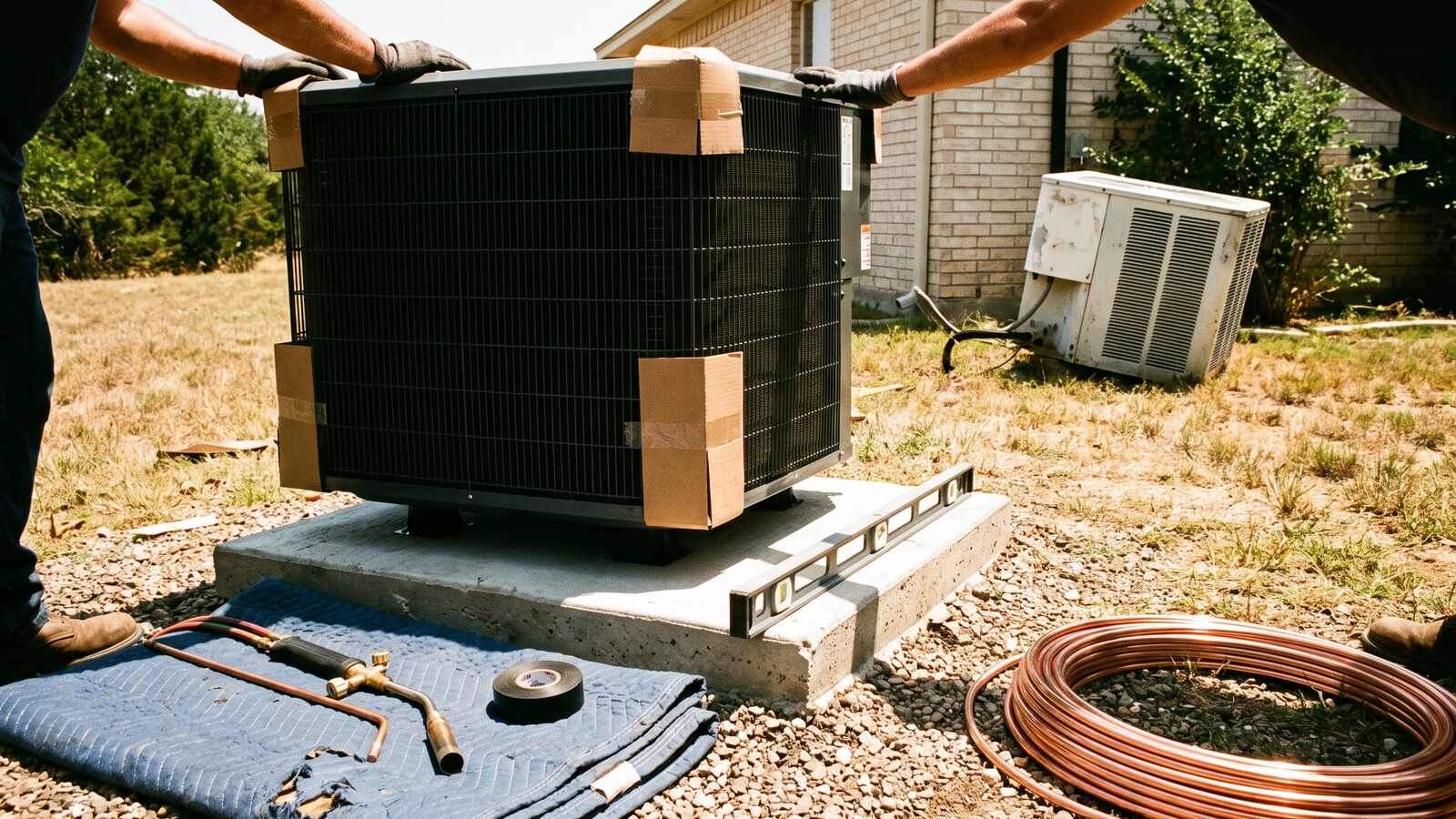
Repair or replace, honestly
Nobody should replace a system because a technician looked grave and said the word compressor. There are four things that decide this, and you can weigh three of them yourself before anybody quotes you anything.
- How old is it. In Central Texas a system runs roughly eight months a year, which is why equipment here tends to age out somewhere in its early to mid teens rather than lasting the twenty years a brochure in Ohio would promise. Under about ten years old, repair is usually the right answer. Past fifteen, the question changes from whether it can be fixed to whether it is worth fixing.
- What broke. A capacitor, a contactor, a fan motor or a drain is a repair on any system at any age. A compressor, an evaporator coil, or a leak inside a coil that is no longer available is a different category, because you are spending a large fraction of a new system on the oldest part of the old one.
- What refrigerant is in it. If the data plate says R-22, your system predates 2010 or thereabouts and that refrigerant has not been produced or imported for years. What is left is reclaimed and priced accordingly. A large R-22 leak repair on a fifteen year old system is usually money set on fire.
- How many times you have called somebody in the last two years. Two service calls in two summers is a system telling you something. Three is a system that has made up its mind.
There is a version of this conversation where we recommend the repair, you spend a modest amount, and we do not sell a system. That happens regularly and it costs us the bigger ticket. We have it anyway, because we have to drive past your house again. There is a rough repair-or-replace tool on the pricing page if you want to run your own numbers before you call anybody.
Sizing it, which is the part most people skip
The single most common way a brand new system disappoints its owner is that it is too big. Not defective. Too big. And it happens because sizing a system properly takes an hour with a tape measure and a laptop, while sizing it lazily takes four seconds: look at the old one, order the same tonnage, done.
That shortcut assumes the last person got it right, and it ignores everything that has changed since. Windows get replaced. Attics get more insulation blown in. Somebody added a room, or enclosed a patio, or planted a live oak that now shades the entire west wall at four in the afternoon. A load calculation, which the trade calls a Manual J, works the house out room by room: square footage and ceiling height, orientation, window area and glazing, insulation depth, duct location and leakage, and how much outside air the house leaks on its own.
Why oversizing is a genuine problem here and not a theory
An air conditioner does two jobs. It lowers the temperature and it pulls water out of the air, and it only does the second one while it is actually running. A system with more capacity than the house needs drops the thermostat to setpoint quickly, shuts off, and never runs long enough to dehumidify. You end up with a house that is 72 degrees and clammy, which feels worse than 75 and dry, and the standard reaction is to set the thermostat even lower and make it worse.
That matters more in Central Texas than in a dry climate. We get long humid stretches in May, June and again in the fall where the moisture load is the real problem and the temperature load is modest. That is precisely when an oversized system does the least good. Then there is the wear: a compressor takes its highest current at startup, so a system that short cycles racks up starts, cooks its capacitor, and gets less life out of every part in the box. And the comfort complaint everyone recognizes, the upstairs that never cools, almost always gets worse with a larger unit rather than better, because the problem was air distribution and the bigger box just finishes sooner.
Undersizing is a real problem too, and we are not making a case for it. On a 105 degree afternoon an undersized system runs continuously and slowly loses ground. The point is that right is a number you calculate, not a number you round up out of caution.
After the load comes equipment selection, which the trade calls Manual S: matching the actual rated capacity of a specific outdoor unit and coil combination, at our design conditions rather than at a lab's, against the load that was just calculated. Sensible capacity and latent capacity are separate numbers, and in a humid climate the latent number is the one that decides whether your house feels good.
The ductwork nobody quotes
Here is the uncomfortable part of this trade. You can install perfect equipment on bad duct and get a bad result, and the homeowner will blame the equipment every time.
The most common defect we find in houses out here is return air. Supply is usually adequate because supply is visible and installers count registers. Returns are one or two grilles in a hallway ceiling, sized for the system that was in the house when it was built, and often undersized even for that. Starve a system for return air and static pressure climbs, airflow across the coil drops, capacity drops with it, the coil runs colder than it should and eventually freezes, and the blower works harder for less. A new system on an old strangled return is a new system that will underperform on day one.
So before we quote a replacement, we measure static pressure across the existing system, look at the return path and the filter grille, and put eyes on the trunk and the flex runs in the attic: crushed runs behind stored boxes, disconnected boots sitting above a bedroom ceiling, plenum takeoffs leaking conditioned air into a 140 degree attic, and insulation value on duct that has been baking up there since the house was built. If the fix is simple, we say so. If the duct is the actual problem and the equipment is fine, we will tell you that too, and yes, that is a smaller job than the one we walked in to sell.
What a changeout actually includes
A replacement is not one appliance. When somebody hands you a quote, this is the list it should account for, and if a line is missing it is worth asking why.
- The outdoor unit and a level pad it will sit on for the next fifteen years.
- The matched indoor coil or air handler. Matched is the operative word: the rated efficiency of a system is the rating of a specific tested combination, not of the box outside. A new condenser on a decade old coil is a system with no published rating and no good way to charge it correctly.
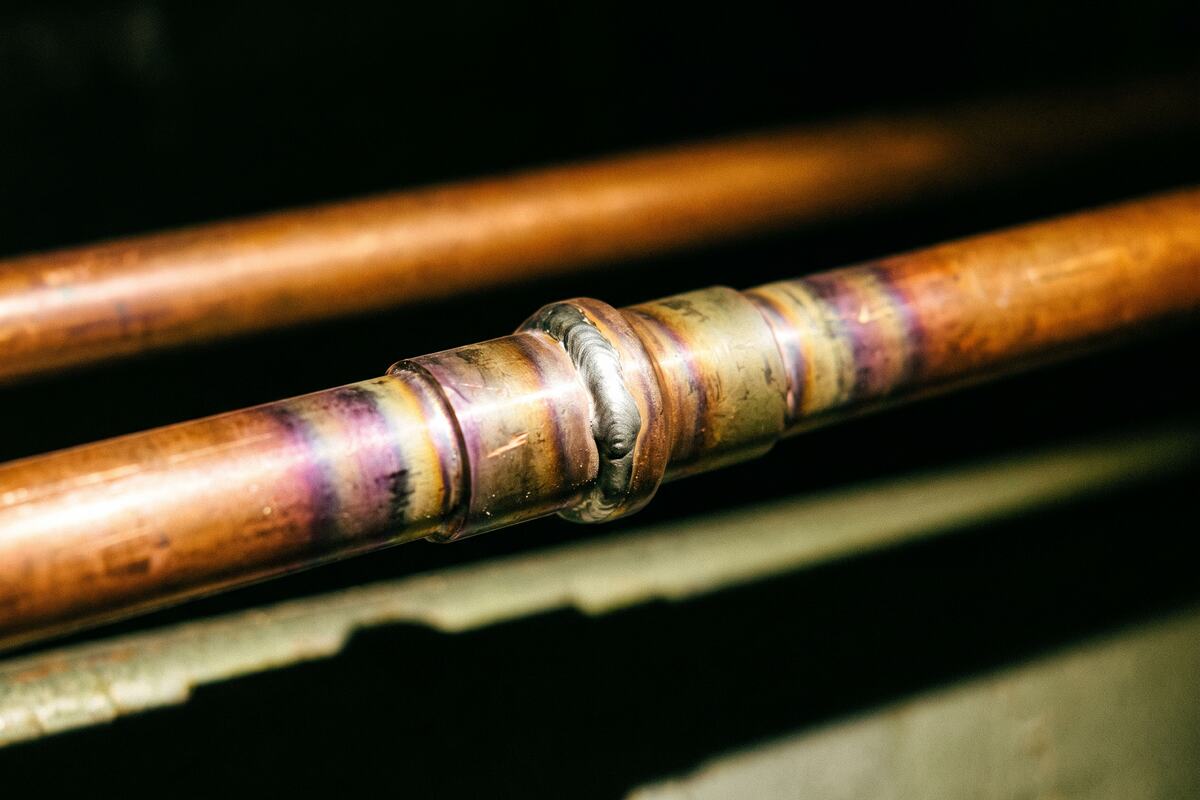
- The line set. Flushed and pressure tested, or replaced. Non negotiable if the old system was R-22, because mineral oil residue and modern refrigerant oils do not get along.
- New whip, disconnect and breaker sizing checked against the data plate on the new equipment rather than assumed from the old.
- Condensate: primary drain, trap, secondary pan and float switch. Anything in an attic gets a float switch. That single inexpensive part is what stands between a clogged drain and a ceiling repair.
- A thermostat that matches the equipment. If the new system stages and the old thermostat does not, the thermostat is part of the job. Why that matters.
- Evacuation and charge. The system gets pulled into a deep vacuum to boil moisture out of it, verified with a micron gauge rather than by watching a needle, then weighed in and verified by subcooling.
- Startup numbers, in writing. Static pressure, temperature split, subcooling and superheat, taken with the system running under real load.
- The permit and the inspection where the jurisdiction requires one, and the old equipment hauled away.
Efficiency and refrigerant, as of right now
Two things changed recently enough that a lot of what you will read online is out of date.
First, efficiency minimums. Texas sits in the federal Southeast region, where a new residential split system air conditioner has to meet at least 14.3 SEER2, and the rule is enforced by the date the system is installed rather than the date it was built. In plain terms, a leftover unit from an older production run cannot simply be sold into your house.
Second, refrigerant. New residential equipment has moved off R-410A onto the A2L refrigerants, mainly R-454B and R-32, which carry a mild flammability classification and come with their own handling and leak detection requirements. Two practical consequences for you: an existing R-410A system remains perfectly legal to run and to service, so nobody should be scaring you into replacing a working one; and a new system is not a drop in match for old parts, which is another reason the coil and the line set are part of the job.
Beyond the minimum, staging is the real comfort decision. A single stage system is either off or flat out. A two stage system spends most of its life in low, which runs longer, quieter and pulls out more moisture. Variable capacity equipment goes further still and is the most comfortable thing available in a humid climate. The honest tradeoff is that the more the equipment can modulate, the more electronics there are to fail, and the more it costs when they do. That is a conversation about how long you plan to be in the house, and it is yours to make with real numbers in front of you rather than a brochure.
Permits, and who is actually in charge of your street
This is genuinely local, genuinely confusing, and almost nobody writes it down.
- Inside Leander city limits a permit is required before mechanical work. Interestingly, properties in Leander's extraterritorial jurisdiction, outside the city limits, only require permits for signs and for water and wastewater connections.
- Georgetown requires a permit to replace a mechanical system and has an inspection type on its own list called a mechanical change out. Trade permits there have to be pulled by a registered contractor.
- Round Rock requires a mechanical permit and a final inspection on a changeout, and its permit jurisdiction reaches past the city limits into the Chandler Creek and Vista Oaks municipal utility districts, which surprises people who assumed they were county.
- Unincorporated Williamson County does not run a residential building permit program at all. There is no county mechanical permit and no county inspection on a changeout. That is not a loophole to celebrate. It means the only thing standing between you and a bad install is the contractor's own standards.
Ask anyone quoting you a system, us included, which jurisdiction your address sits in and whether a permit is included in the price. It is a fair question and the answer tells you a lot.
Money, and what is left of the incentives
$75 to come out on a repair call. A replacement quote comes out of a real visit: measurements, a load calculation, the duct and return story, and a written price for a specific set of equipment. If the visit that diagnosed the failure turns into a replacement, the $75 goes toward the job.
On incentives, two facts worth having. The federal tax credit that used to help pay for high efficiency equipment was terminated for property placed in service after the end of 2025, so any site still advertising it is running old copy. Utility rebates still exist in places, but they change constantly and they are not all claimed the same way: the Oncor residential efficiency program, for example, is claimed by an enrolled service provider rather than by the homeowner, and cooperative programs come and go with their funding. Ask what is actually funded this month before you count on any of it.
How pricing works here. For what it costs to keep the new one healthy, see the maintenance plan.
Questions people ask before they sign anything
Can I replace just the outdoor unit?
Sometimes physically, rarely wisely. Efficiency ratings belong to a tested combination of outdoor unit and indoor coil, so a mismatched pair has no published performance and no reliable way to be charged to spec. Add a different refrigerant generation between the two halves and it stops being a debate. If the coil is young and the same refrigerant family, there are cases. We will tell you which one you are in.
How long does a changeout take?
A straight swap where the new equipment fits the existing footprint is usually a single day, and the house is generally cooling again that evening. Add duct modifications, a new return, an attic platform that has to be rebuilt, or a permit inspection that has to be scheduled, and it stretches. You get the honest version before we start, including the part where the house is warm for a few hours in the middle of it.
Is a bigger unit better?
No, and in a humid climate it is actively worse. An oversized system satisfies the thermostat quickly and shuts off before it has removed much moisture, so the house ends up cold and clammy, and the short cycling wears the compressor and its capacitor faster. If a room is hot, the answer is almost always airflow and duct, not tonnage.
How long should a system last around here?
Longer than people fear and shorter than the brochure. A system in Central Texas runs close to eight months a year, so it does more work in a decade than the same equipment does in fifteen years up north. Early to mid teens is a normal service life here, and a maintained system in a shaded lot with good ductwork can beat that comfortably. That is an expectation, not a promise, and anybody who gives you a guaranteed number is selling.
Do I need a permit to replace my system?
It depends entirely on which side of a line your house sits on. Inside Leander, Georgetown and Round Rock city limits, yes, and Round Rock's reach extends into the Chandler Creek and Vista Oaks municipal utility districts. In unincorporated Williamson County there is no county residential mechanical permit at all. Ask for the answer for your specific address rather than for your mailing city.
What size system does my house need?
The only honest answer is that it comes out of a load calculation on your actual house, not from square footage and not from whatever is bolted to the pad today. Rules of thumb are how houses end up with equipment a half ton or a full ton larger than they need. If a quote arrives without anybody having measured a window, that is worth noticing.
Related
Where we do this work
Your house is not going to fix itself, and it is not getting any cooler out there.
$75 to come out. A licensed tech, a real look at the whole system, and a straight answer about what is actually wrong with it.
Monday to Friday, 7:00am to 5:00pm. Saturday and Sunday by appointment.