The short season, and why it still matters
Heat runs maybe eight weeks a year here, which is exactly why it fails. A machine that sits idle from March to November and then gets asked for everything on the first hard night is a machine that finds out what rusted.
$75 for the service call. Monday to Friday, 7:00am to 5:00pm. Saturday and Sunday by appointment.
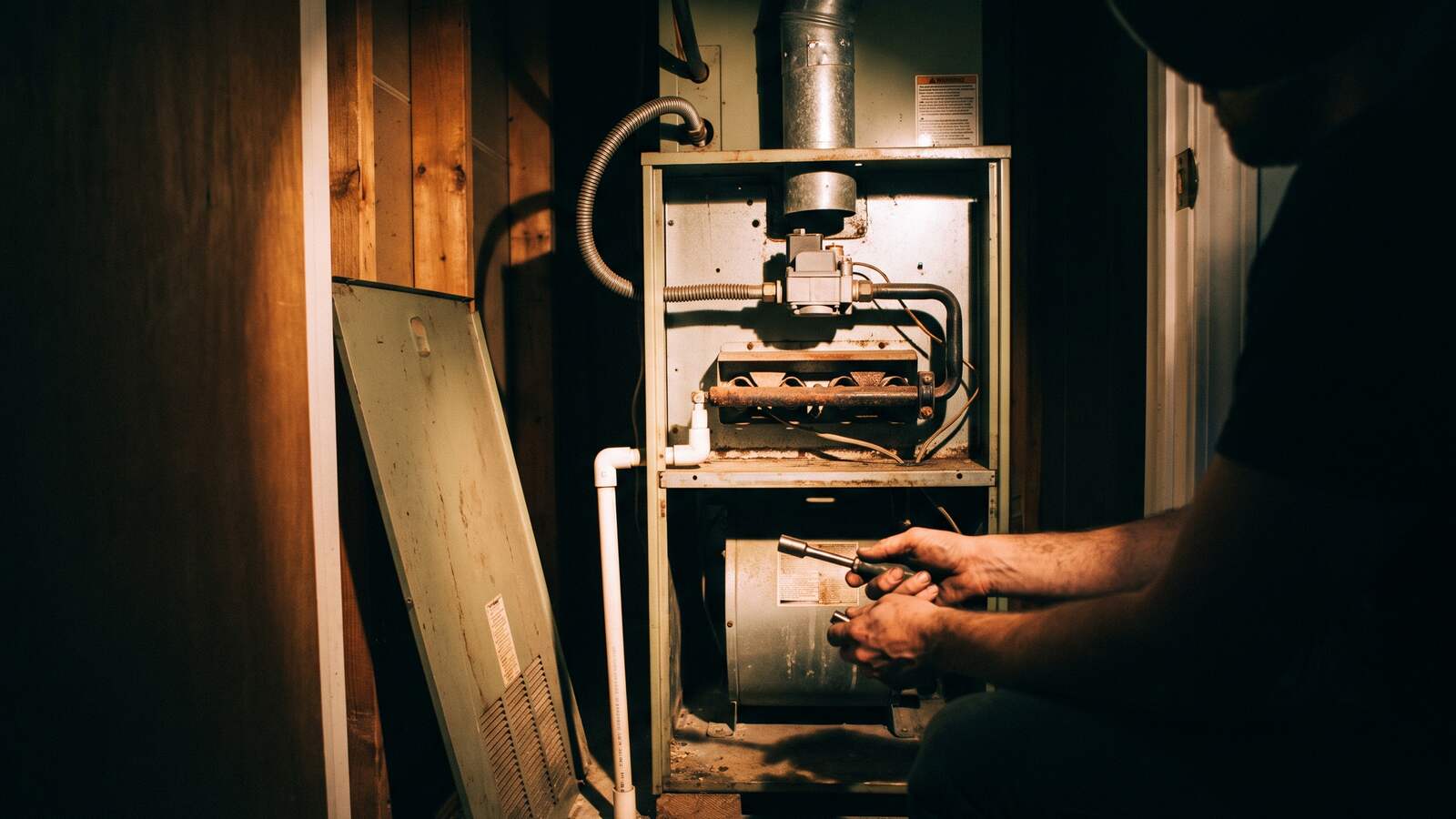
First, which machine do you have
Around here it is close to a coin flip. Leander, Cedar Park and Round Rock run mostly on natural gas, so most of those houses have a gas furnace sitting under the coil. Liberty Hill and the newer subdivisions out west are overwhelmingly electric, which means a heat pump with a bank of resistance strips behind it. Georgetown is split almost exactly down the middle.
Those are two completely different machines with two completely different failure lists, and a shop that answers the phone the same way for both is guessing. Go look at the outdoor unit on the coldest morning of the year: if it is running, you have a heat pump. If it sits there dead while the house gets warm, you have a furnace.
If you have a gas furnace
It lights, or it tries to and gives up. Most no-heat calls on a furnace land on one of these, and the first one on the list is by a wide margin the most common heating call anybody in this trade takes.
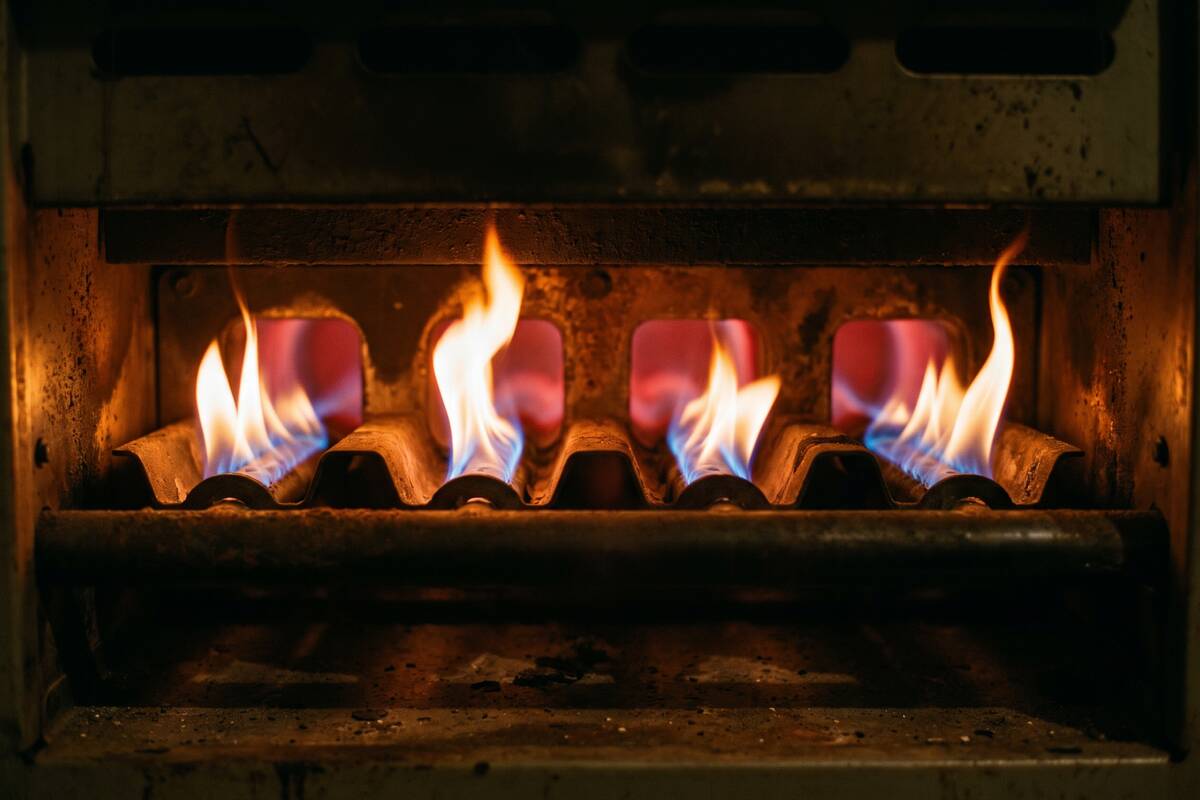
- Flame sensor. A thin metal rod that sits in the burner flame and proves to the board that the gas actually lit. A film of oxide on that rod drops the current it passes to almost nothing, the board decides the flame is not there, and it shuts the gas off two or three seconds after lighting. Try, quit, try, quit, lock out. That is a cleaning, not a part.
- Hot surface igniter. The element that glows orange before the burners light. They crack, and a cracked one either glows and lights nothing or does not glow at all.
- Pressure switch. It proves the inducer motor is actually pulling draft before the gas valve is allowed to open. It refuses to close when the flue is blocked, when the condensate trap on a high efficiency furnace is full, or when its little rubber hose has gone hard and split.
- High limit. Trips when the furnace runs hotter than it should, which is nearly always airflow: a filter nobody changed, closed registers, or a return that cannot feed it. Repeated limit trips are how heat exchangers crack.
- Rollout switch. Flame coming forward out of the burner box instead of up the flue. This one is a safety device, not an inconvenience. If a rollout has tripped, the answer is not to push the button and walk away.
- Inducer motor, gas valve, control board. Less common, more expensive, and worth weighing against the age of the furnace before you spend it.
One more thing, and it is not a repair. If your house burns gas, it needs a working carbon monoxide alarm on every floor with a sleeping area. That is true whether or not you ever call us, and it is worth ten minutes on a Saturday.
If you have a heat pump
A heat pump is your air conditioner running backwards. It does not make heat, it moves heat, and in December it is moving heat out of 35 degree outdoor air into your living room. That works better than people expect and it fails in ways a furnace never does.
- Reversing valve. The part that decides which direction the refrigerant runs. Stuck valve or a dead solenoid coil and you get air conditioning in January.
- Defrost board or defrost sensor. The outdoor coil ices up in a cold drizzle, which is normal, and the board is supposed to run a defrost cycle to clear it. When that circuit fails the coil turns into a block of ice and capacity falls through the floor.
- Low charge. A heat pump pulling heat out of cold air has no margin at all. A slight undercharge that hid all summer shows up as it cannot keep up in January.
- Auxiliary heat strips and the sequencer. The electric resistance heat that carries the load when the compressor cannot. Strips fail open, sequencers stick, and a stuck sequencer is a bill you will notice.
- The pad and the drainage. An outdoor unit sitting in standing water that freezes around the base will tear its own fan blade apart. Cheap to prevent, unpleasant to fix.
And the most common heat pump complaint that is not a fault at all: the air feels cool. A heat pump delivers supply air somewhere around 95 to 105 degrees. A gas furnace delivers 120 to 140. Your hand is 98.6, so furnace air feels hot and heat pump air feels like nothing. If the house is holding temperature and the runtime is long and steady, it is working the way it was designed to.
The freeze
Two dates changed how everybody in Central Texas thinks about heating: February 2021, and the ice storm in February 2023. Neither of them was a normal winter, and both of them are the reason this section exists.
Here is the useful part. When a hard freeze is forecast, run your heat for twenty minutes a few days before it arrives, while there is still time to fix what you find. Change the filter, because a starved furnace trips its limit and a starved heat pump ices its coil. Find your gas shutoff and the breaker for the heat strips now rather than by flashlight. Clear leaves, cardboard and anything else off the outdoor unit so it can breathe and defrost.
And do not set the thermostat to 85 to catch up. It does not heat faster. On a heat pump it simply calls the resistance strips and runs them until you have made a memorable choice about your electric bill. What the aux and emergency heat settings actually do is worth five minutes before the front arrives.
An honest word about the day itself. During a regional freeze every shop in this county is behind, and we are two people. We will tell you where you sit in the line instead of telling you what you want to hear.
How pricing works on a heating call
Same as everything else. $75 to come out, a real diagnosis, and a price for the specific repair before anybody starts. It applies to the repair if you tell us to go ahead on the same visit. On heating there is one extra wrinkle worth saying out loud: if we find a cracked heat exchanger or a rollout that keeps tripping, we are going to tell you to stop running it, and that conversation is about your family rather than your invoice. How we price the work.
Questions we get in January
What is that burning smell the first time the heat runs?
Dust that settled on the heat exchanger and the strips over eight months, cooking off. It smells alarming and it is normal, and it should be gone within about twenty minutes. What is not normal is a smell that persists, a smell of gas, or a sharp electrical smell. Those three get the system shut off and a phone call.
My outdoor unit is steaming and covered in frost. Is it broken?
Probably not. A heat pump ices its outdoor coil in cold damp weather and then runs a defrost cycle to melt it off, which produces a cloud of steam that has convinced more than one neighbor to call the fire department. What is wrong is ice that never clears, ice packed solid across the whole coil, or a unit sitting in a frozen puddle.
My furnace lights and shuts off a few seconds later, over and over.
That pattern is close to a signature. The board is lighting the burners and then not seeing proof of flame, so it drops the gas for safety, retries a couple of times and locks out. The usual cause is a dirty flame sensor. It is one of the least expensive things that can be wrong with a furnace and one of the most common reasons a house is cold.
Should I run emergency heat when it gets really cold?
No, not as a strategy. Emergency heat locks the compressor out entirely and runs the resistance strips alone, which is the most expensive way your house can be warm. It exists for when the heat pump itself has failed. If your heat pump is working, let it work and let the aux stage come on by itself when the thermostat decides it is needed.
We are out on acreage and run propane. Is that different?
Same furnace, different fuel. Propane burns at a different pressure and a different volume, so a propane furnace has different burner orifices and a different regulator setting, and one converted badly runs sooty and lazy. Tell us it is propane when you call. Also worth knowing: your fuel supply is a tank in the yard, not a utility main, so check the gauge before you decide the furnace is broken.
Do you service both gas furnaces and heat pumps?
Yes. The state license this shop holds is TACLB00070086C, a Class B air conditioning contractor with the commercial refrigeration endorsement, and it covers gas fired equipment and electric heat alike on residential and light commercial systems. You can verify that number with the state, and we would rather you did than take our word for it.
Related
Where we do this work
Your house is not going to fix itself, and it is not getting any cooler out there.
$75 to come out. A licensed tech, a real look at the whole system, and a straight answer about what is actually wrong with it.
Monday to Friday, 7:00am to 5:00pm. Saturday and Sunday by appointment.