Your AC is blowing warm air. Here is what happens next.
Something in the box stopped doing its job and the house is climbing about a degree an hour. The useful question is not whether it is broken. It is which of four or five very different things broke, because they are four or five very different invoices.
$75 for the service call. Monday to Friday, 7:00am to 5:00pm. Saturday and Sunday by appointment.
What you are actually seeing
People describe this call in about seven ways. Each description narrows it down before anybody opens a panel, so tell us which one sounds like your house.
- Air at the vents, but it feels like room air, and the outdoor fan is spinning.
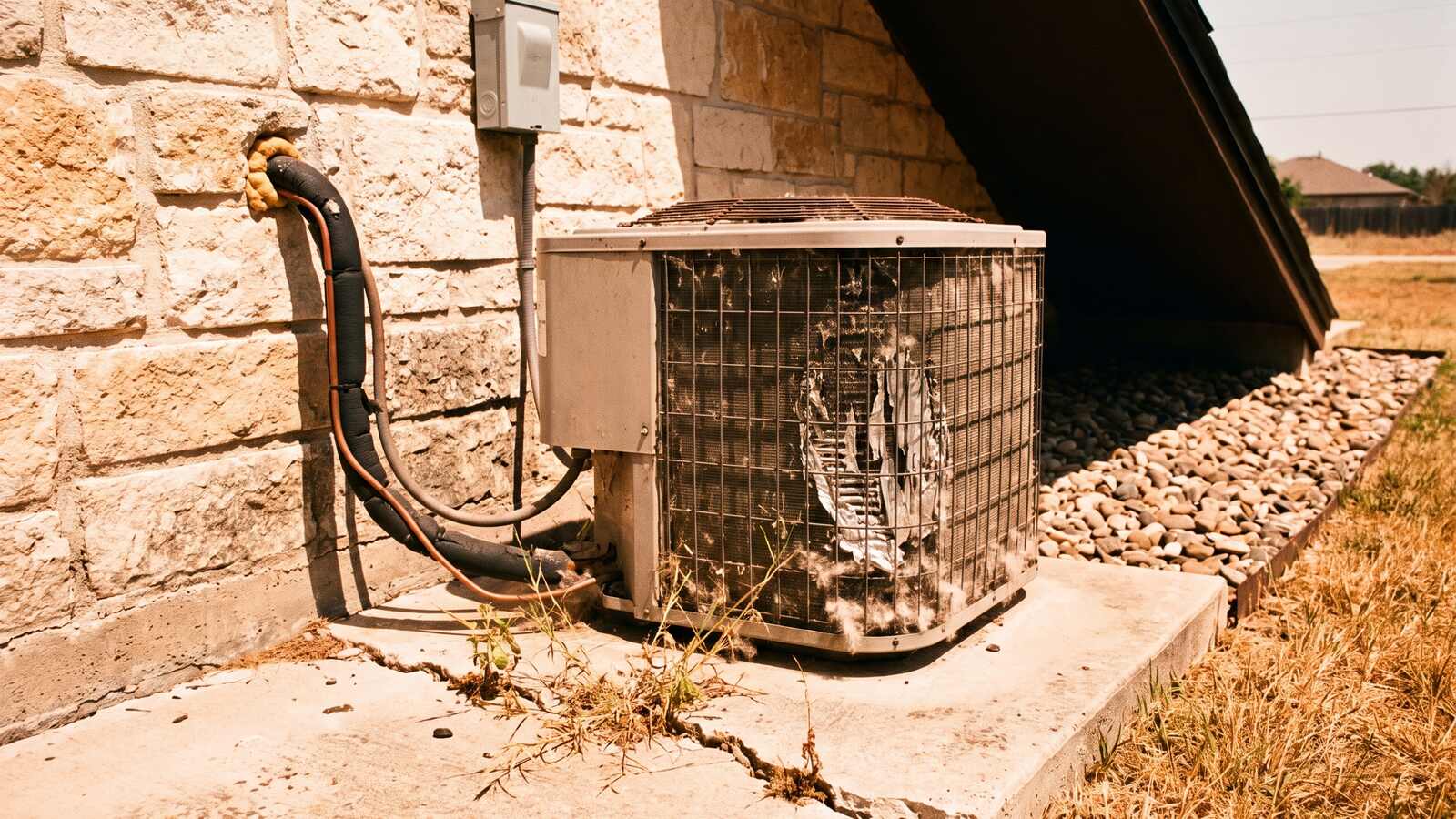
- The blower is doing its job and the refrigeration side is not. Low charge with a leak behind it, a compressor that is not pumping, or a system tripped out on high head pressure because the condenser coil is packed with cottonwood and dust.
- The outdoor unit hums and then goes quiet. Nothing spins.
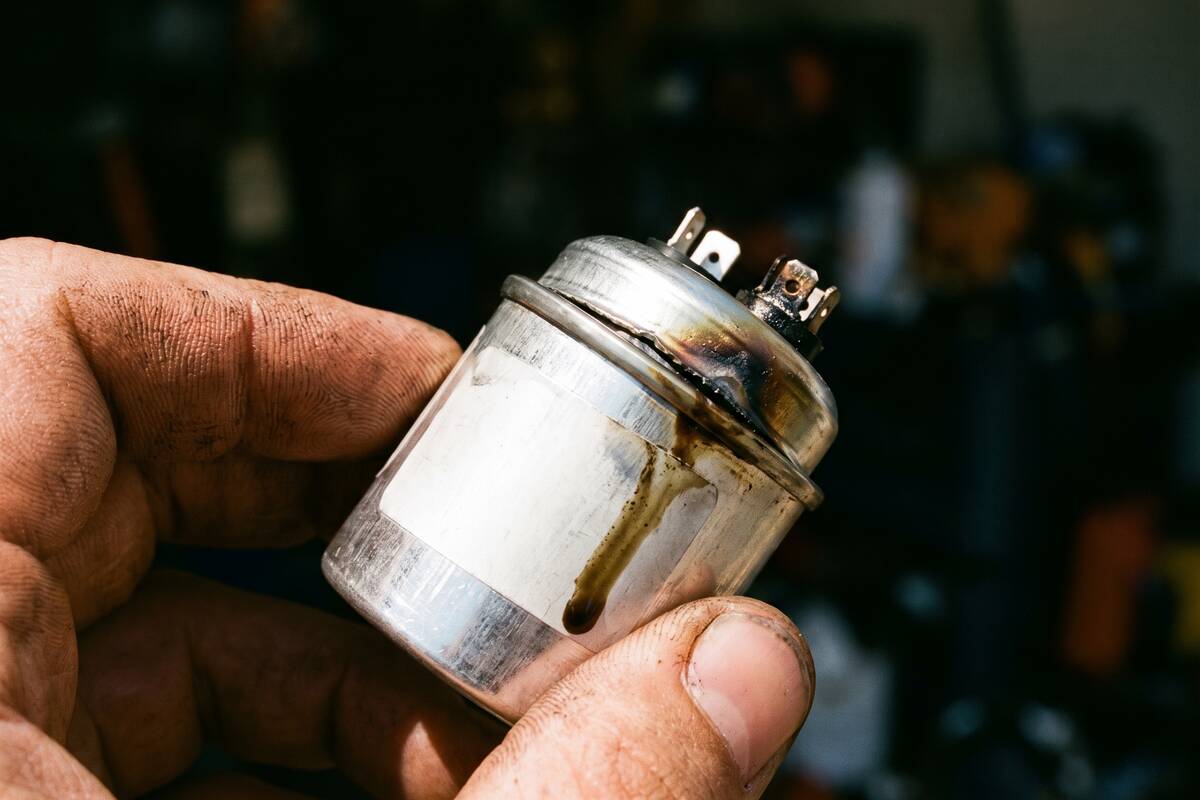
- More often than not that is the run capacitor. It is a metal can about the size of a soup can, it is the cheapest part in the entire system, and when its top bulges or vents the compressor cannot get off the ground.
- Inside blows fine. The outdoor unit is completely dead.
- The contactor, its low voltage coil, the fuse on the control board, or the float switch in the drain pan doing exactly what it was installed to do.
- There is ice on the copper line, or a frozen block of white on the coil.
- Ice means the coil got colder than it should have, which means airflow or charge. A collapsed filter, a return that cannot move enough air, a blower wheel caked in dust, or a low charge from a leak. Ice is a symptom. Chipping it off fixes nothing.
- It runs twenty minutes, shuts off, and there is a stain on the hallway ceiling.
- The condensate drain is clogged and the safety float switch is shutting the system down before the pan overflows into your ceiling. In this county the drain line grows algae every single summer, and the secondary pan under an attic air handler is the only thing between that and drywall.
- The breaker trips, and it only ever trips in the afternoon.
- A weak capacitor, a compressor pulling amps it should not, a shorted fan motor, or a breaker that has been reset so many times it no longer holds what it is rated for. Reset it once. If it goes again, stop resetting it.
- It runs and runs and never quite gets there.
- On a 105 degree afternoon a correctly sized system running continuously and holding you within a few degrees of setpoint is behaving exactly as designed. If it is losing ground at ten in the morning, that is a different problem, and it is usually charge, ductwork or a coil nobody has cleaned since the house was built.
What we do about it
The order matters, because the cheap causes sit in front of the expensive ones and diagnosing backwards is how people end up buying a compressor to fix a clogged drain.
- Confirm the call is getting there. Thermostat calling, 24 volts arriving at the air handler, control board fuse intact, float switch not open. Half of the dead outdoor units we see are dead because something upstream told them to be.
- Read the electricals. Capacitor measured against the microfarad rating stamped on the can, not eyeballed. Contactor points checked for pitting and welding. Amp draw on the compressor and the condenser fan compared against the rated load on the data plate.
- Check the air before the refrigerant. Filter, return grille, blower wheel, evaporator coil face, and static pressure across the system. A system starved for air will fake almost every symptom of a refrigerant problem, and adding refrigerant to it makes the whole thing worse.
- Then the gauges. Suction and liquid pressures, superheat and subcooling worked out from the actual line temperatures, and a temperature split measured across the coil. Those numbers tell us whether the charge is low, whether the metering device or TXV is misbehaving, and whether the compressor is still pumping.
- If it is low, we find out where it went. Refrigerant is not consumed. If there is less of it than there was, it left through a hole, and the usual holes are the evaporator coil, a flare or braze at the line set, and a leaking Schrader core under a service cap. Electronic leak detection or dye, and then a real answer about whether that repair is worth making.
- Tell you, then fix it. What it is, what it costs, and whether it makes sense on this particular system. Common parts ride on the truck, so most of these are the same visit.
Why it always fails on the worst day
Because the worst day is the test. An air conditioner rejects the heat it pulls out of your house into the air outside, and at four in the afternoon in August that air is 100 degrees or better. Head pressure climbs, amp draw climbs, and every marginal component in the system is finally asked for everything it has. A capacitor sitting a few microfarads under its rating starts the compressor fine on a mild morning in May and cannot start it at all on the fourteenth straight afternoon over 100.
The attic makes it worse. Most houses around here put the air handler and the whole supply trunk up in an attic that runs 130 to 140 degrees on those afternoons, which is the single hottest place in your house and also where your cold air is being made. That is the actual job, and it is why the person doing it is soaked through by the second call of the day.
How pricing works on a repair
$75 to come out. That is a diagnosis, not a guess, and it is not a range that doubles once the panel is off. It applies to the repair if you tell us to go ahead on the same visit. Past that, you get a price for the specific repair before any of it happens, and you are free to sit with it, or call somebody else and compare, and the diagnosis is still yours.
If the number that comes back is large and the system is old, that is the point where we stop talking about the part and start talking about the machine. Repair or replace is a real conversation with a real arithmetic to it, and the full breakdown of how we price the work lives on the pricing page.
Questions we get in the driveway
It is frozen solid. What do I do before you get here?
Turn the cooling off at the thermostat and set the fan to on. That runs warm house air across the coil and thaws it without a hair dryer, a hammer or a garden hose. While it thaws, pull the filter and look at it. If light does not pass through it, that may well be your entire problem. Give it a few hours, then try cooling again and tell us what happened, because a system that freezes twice is telling us something useful.
Can you just top it off with refrigerant?
We can, and on a hot Friday we sometimes will to get you through the weekend, but you should know what you are buying. Refrigerant is a sealed charge. It does not get used up. If the system is low, it is leaking, and every top off is you paying to put gas back into the same hole. Older systems still running R-22 make that worse, because it has not been produced or imported in years and what is left is reclaimed and priced like it. We would rather find the leak and let you decide with the number in front of you.
Why does the breaker only trip in the afternoon?
Because that is when the load is highest. A compressor that is a little tired or a capacitor that is a little weak pulls its worst amp draw against the highest head pressure of the day. The breaker is not being dramatic, it is doing its job. Reset it once. If it trips again, leave it off and call, because the next thing that gets damaged is more expensive than the thing causing it.
Can I change the capacitor myself?
Plenty of people do. Two things to know. It stores a charge after the disconnect is pulled and it will bite you, so it gets discharged before anything else. And the replacement has to match both the microfarad rating and the voltage rating, not just fit the bracket. The bigger question is why it died. Capacitors fail early when they are cooking next to a compressor working too hard, and if that is what happened, you will be buying another one in July.
How long does a repair usually take?
Diagnosis is usually under an hour. Capacitors, contactors, float switches, drain clears and fan motors are common enough that the parts ride on the truck, and those finish on the same visit. Coils, compressors and anything that has to be ordered from a supply house run longer, and you will get a real date rather than a comfortable one.
It is half past five and it just quit. What now?
We are Mon to Fri, 7 to 5, and Saturday and Sunday by appointment. So here is the honest version. Leave a message or send the form tonight and you are at the front of tomorrow. In the meantime, check the filter, check the breaker once, and look for water in the pan or around the air handler. Half the calls that come in overnight turn out to be the drain and the float switch, and knowing that before we arrive saves you time.
Related
Where we do this work
Your house is not going to fix itself, and it is not getting any cooler out there.
$75 to come out. A licensed tech, a real look at the whole system, and a straight answer about what is actually wrong with it.
Monday to Friday, 7:00am to 5:00pm. Saturday and Sunday by appointment.