Cedar fever, limestone dust, and what filtration actually fixes
Every January half of this county wakes up convinced it has the flu, and every summer the same people wipe a fine pale grit off the countertops two days after cleaning. Some of that your air conditioner can do something about. Some of it, it cannot, and you deserve to know which is which before you buy anything.
$75 for the service call. Monday to Friday, 7:00am to 5:00pm. Saturday and Sunday by appointment.
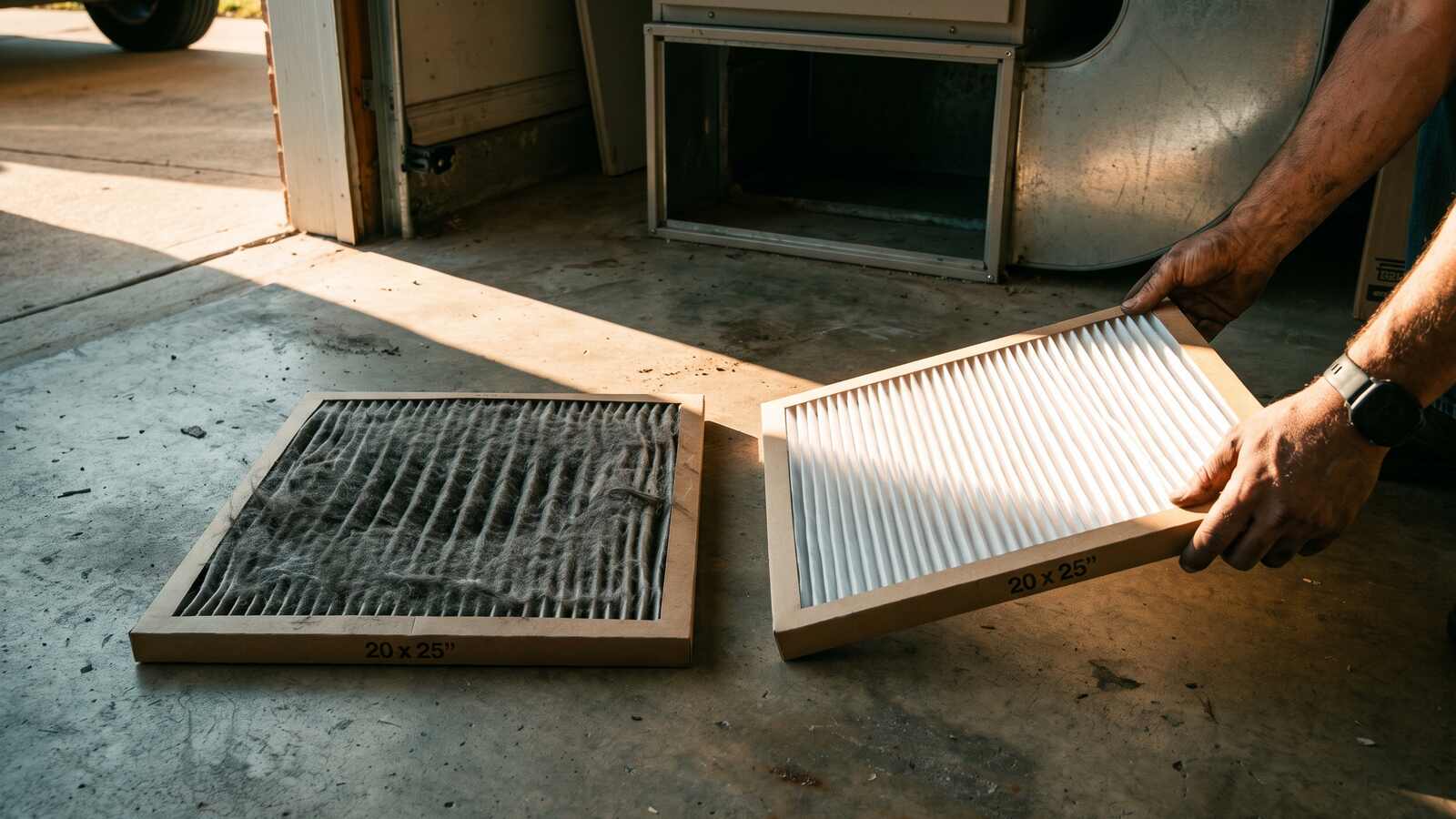
What you are actually breathing out here
Three things, mostly, and they arrive on a schedule.
Mountain cedar, which is really Ashe juniper, releases its pollen from about December through February, and the Hill Country west of here is the middle of it rather than the edge. When a dry norther blows through in early January you can watch it come off the trees in visible clouds. Then oak takes over in spring and leaves that yellow film on everything.
Limestone is the second one. This is caliche country. Every gravel drive, every pad site scraped for the next subdivision, and every road cut throws a fine pale dust that gets into houses and settles on dark furniture where you cannot miss it. Leander and Liberty Hill in particular have been under continuous construction for a decade, and the dust does not care whose lot it came from.
The third one is your own house, and it is the one people never guess. A return duct or a filter grille that leaks in the attic runs at negative pressure, which means it pulls attic air into your system every time the blower starts: insulation fibers, decades of settled dust, and 140 degree air in August. If your house gets dusty again two days after you clean it, this is where we look first, and no filter you buy will fix it.
The four categories, and what each one honestly does
Clean air equipment gets sold as one undifferentiated pile of good intentions. It is really four separate categories that solve four separate problems, and buying the wrong one is how people end up disappointed by a device that worked exactly as designed.
1. Media filtration
The one inch filter in your ceiling grille is not really an air cleaner. It is a rock catcher that keeps the blower wheel and the coil from loading up with lint. It is rated on the MERV scale, and the intuitive move, buying the highest MERV that fits, is the single most common way people quietly strangle their own system. A dense filter in a one inch frame has very little surface area to work with, so it raises static pressure, drops airflow across the coil, and costs you capacity and eventually the coil itself.
The fix is surface area rather than density. A four or five inch media cabinet at the return holds a deeply pleated cartridge with several times the face area of a one inch filter, which is why it can run in the MERV 11 to 13 range, catch a great deal more of the fine material including pollen, and still breathe. It also lasts six months to a year instead of thirty days, which matters in a house where nobody enjoys the ladder. Fitting one usually means opening up the return plenum and sometimes enlarging the return itself, and that is the part of the job worth doing properly.
One limit worth stating plainly: a filter only treats air that passes through it, and air only passes through it when the system is running. Nothing in your ductwork does anything about what walks in the front door on a coat.
2. Coil hygiene and UV
Ultraviolet equipment gets sold as one thing and it is two. A coil sterilizing lamp is aimed at the evaporator coil and the drain pan, and it does a real and modest job: those surfaces sit wet for months in this climate and they grow a biofilm that clogs drains and makes a system smell like a locker room the first week of summer. If your drain keeps backing up and your coil looks slimy, that lamp is a reasonable conversation.
Air stream UV, aimed at the moving air rather than the coil, is a much weaker proposition, because the air is only in front of the lamp for a fraction of a second. We are not going to tell you what any of it will do for your allergies or anybody's diagnosis, because that is not our field and anybody in this trade who says otherwise is selling.
The category we steer people away from is the ionizing and oxidizing gadget that promises to treat the whole house from inside the plenum. The evidence is thin, some of them produce byproducts you did not ask for, and we would rather put the same money into filtration and sealing, where the effect is measurable.
3. Whole home dehumidification
Comfort in Central Texas is a moisture argument as much as a temperature one. Your air conditioner is already a dehumidifier, but only while it runs, which is why an oversized system leaves a house cold and clammy: it hits setpoint and quits before it has pulled much water out. That sizing problem is worth understanding before you buy a machine to solve it.
The season where a standalone dehumidifier actually earns its keep is the shoulder: April, May, October. Seventy-four degrees outside, damp, and the air conditioner barely has a reason to run, so the house sits at sixty percent relative humidity and feels like a basement. A whole home dehumidifier ducted into the return runs independently of cooling and holds the house in the mid forties to low fifties. That is also the range where dust mites and mold have a harder time, which is a fact about the range and not a promise about anybody's health.
4. Ventilation and fresh air
Houses built here in the last fifteen years are tight. That is a good thing for your power bill and it means the house no longer breathes on its own through gaps in the envelope, so fresh air has to be deliberate. Newer construction often already has a fresh air duct tied into the return with a motorized damper on a controller, and a surprising number of them have been dampered shut by somebody who did not know what it was.
The complication in our climate is that outside air in July is hot and wet, so ventilation has to be metered and is usually best paired with dehumidification rather than run open. Beyond that, the cheapest ventilation improvements in most houses are the bath fans that barely move air and the range hood that vents into a cabinet.
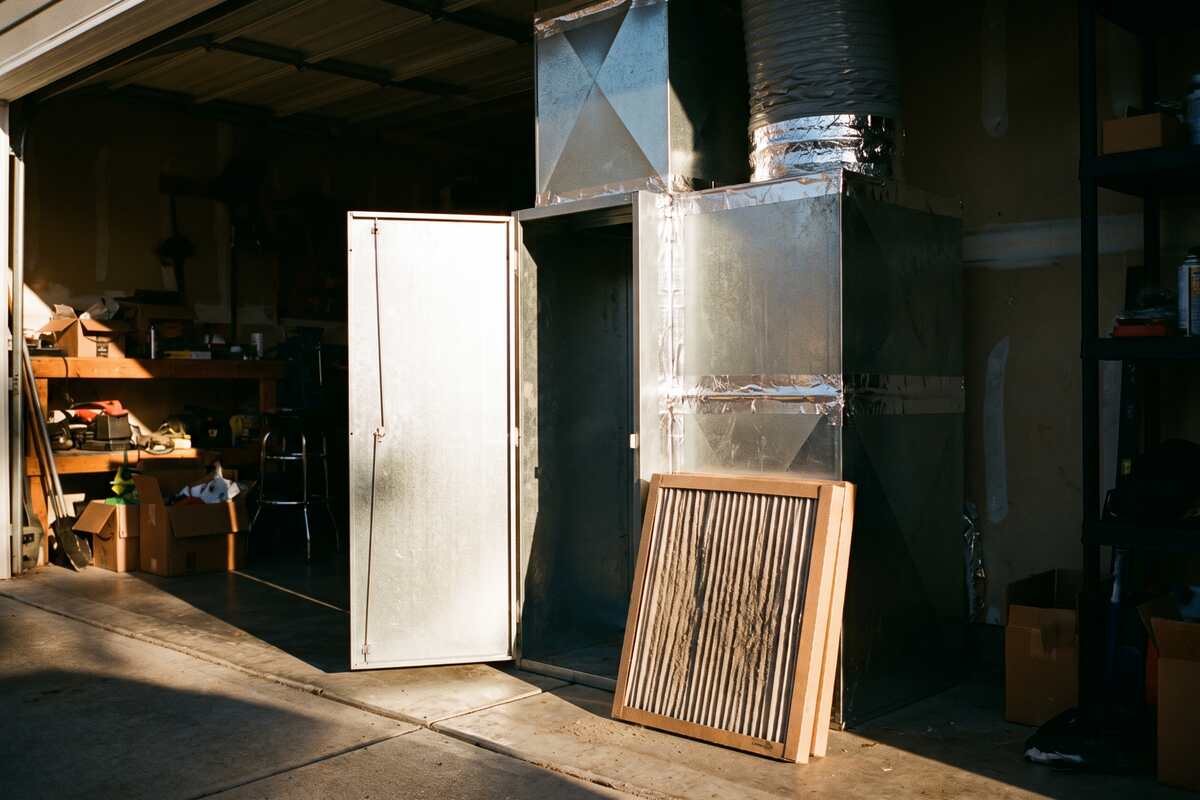
The unglamorous part that outperforms all of it
Before any equipment goes in, three things get checked, and in plenty of houses they turn out to be the whole answer.
- Does the filter actually seal. A filter loose in an oversized frame with a half inch gap at the edge is a filter that most of your air simply walks around.
- Is the return leaking. Sealed plenum takeoffs, sealed filter grille, and duct connections that are actually mastic sealed instead of taped with something that let go in 2011.
- Is the coil and the drain pan clean. A coil packed with dust is both an air quality problem and a capacity problem, and a pan holding standing water is where the summer smell comes from. That is tune-up territory, and it is covered on the maintenance plan page rather than repeated here.
Sealing a return and fitting a properly sized filter costs a fraction of what the shiny equipment costs, and in a dusty house it does more. We would rather do that first and let you decide about the rest afterward.
How pricing works on clean air work
Air quality work is rarely an urgent call, so it usually rides along with something else: a repair visit, a tune-up, or a replacement where the return is getting opened up anyway. If it is a stand alone visit, it is $75 to come out and look at the system, the return, the filter and the drain, and you get a written price for whatever we recommend before anything happens. It applies to the work if you tell us to go ahead on the same visit. How we price the work.
Questions about air, answered plainly
What MERV should I be buying?
If you are stuck with one inch filters, MERV 8 to 11 and changed on time is the sensible band for most systems. Going higher in a one inch frame usually costs you more in airflow than it gains you in filtration. If you want genuinely better filtration, the answer is not a denser filter, it is a deeper one: a four or five inch media cabinet gets you into the MERV 11 to 13 range without choking the blower.
My house is dusty again two days after I clean. Why?
Usually because your return is drawing unfiltered air from somewhere it should not. A leaking return duct, an unsealed filter grille, or a plenum that was never mastic sealed will pull attic air straight past the filter and into every room in the house. That is a sealing job, not a filter upgrade, and it is one of the few air quality fixes with an obvious before and after.
Should I leave the fan running all the time?
It helps even out temperatures between rooms and it does put more air through the filter. The catch is humidity: on a muggy day, running the blower continuously right after the cooling cycle ends can re-evaporate the water sitting on the coil and send it back into the house. If your thermostat offers a circulate mode that runs the fan a set number of minutes per hour, that is the better compromise.
Do I need my ducts cleaned?
Most houses, no, not on a schedule. Duct cleaning is worth doing after rodents, after water damage, after a remodel that filled the system with drywall dust, or when there is visible growth inside the ductwork. Routine cleaning of a dry, sealed duct system in a normal house is largely a sales product, and the aggressive phone campaigns you get about it should tell you something.
What humidity should I hold the house at?
Somewhere in the mid forties to low fifties percent relative humidity is a reasonable target here. Below about forty and the house gets uncomfortable in a different way, plus wood floors and trim start to move. Above sixty and everything feels sticky at any temperature. A cheap hygrometer on a bookshelf will tell you more about why your house feels wrong than the thermostat will.
Will any of this fix cedar fever?
Better filtration will reduce what circulates through your ductwork in January, and in a house that gets sealed and filtered properly people generally notice a difference indoors. What we will not tell you is that a piece of HVAC equipment treats an allergy. It does not, and the honest ceiling on what we sell is the air inside your house.
Related
Where we do this work
Your house is not going to fix itself, and it is not getting any cooler out there.
$75 to come out. A licensed tech, a real look at the whole system, and a straight answer about what is actually wrong with it.
Monday to Friday, 7:00am to 5:00pm. Saturday and Sunday by appointment.